Buying a property has become a challenge for many Quebec households, but the gap between regions remains vast. While the provincial median for a single-family home stands at $523,750, several municipalities still post prices below half that amount. Budget is obviously not the only criterion when choosing where to live, but it is often what determines the list of cities worth considering.
Following the article on the 10 most expensive cities in Quebec, this one presents the ranking of the province’s most affordable municipalities in 2026.
The median prices in this article come from Centris real estate statistics for the second quarter of 2026 and cover single-family homes.
In brief
- La Tuque is the most affordable municipality in Quebec among active markets, with a median price of $244,000.
- Four of the ten cities in the ranking still make it possible to buy under the $300,000 mark.
- Saint-Calixte, in Lanaudière, is the least expensive municipality in the Greater Montreal area at $332,000.
- Resource regions dominate the list, but Lanaudière and the Laurentians each place one municipality on it.
- The minimum down payment remains 5% in all of these cities, which comes to less than $17,250 even for the most expensive one in the ranking.
Why do some municipalities not appear in the ranking?
Before getting to the ranking, one clarification is in order. Centris publishes a median price only when the number of transactions is high enough to produce a reliable statistic. A few small municipalities therefore show lower prices, but on samples that are too thin for a single quarter.
The ranking below is limited to active markets. The distinction matters for a buyer: a very low price in a municipality where two or three houses sell each year does not offer real purchasing opportunities.
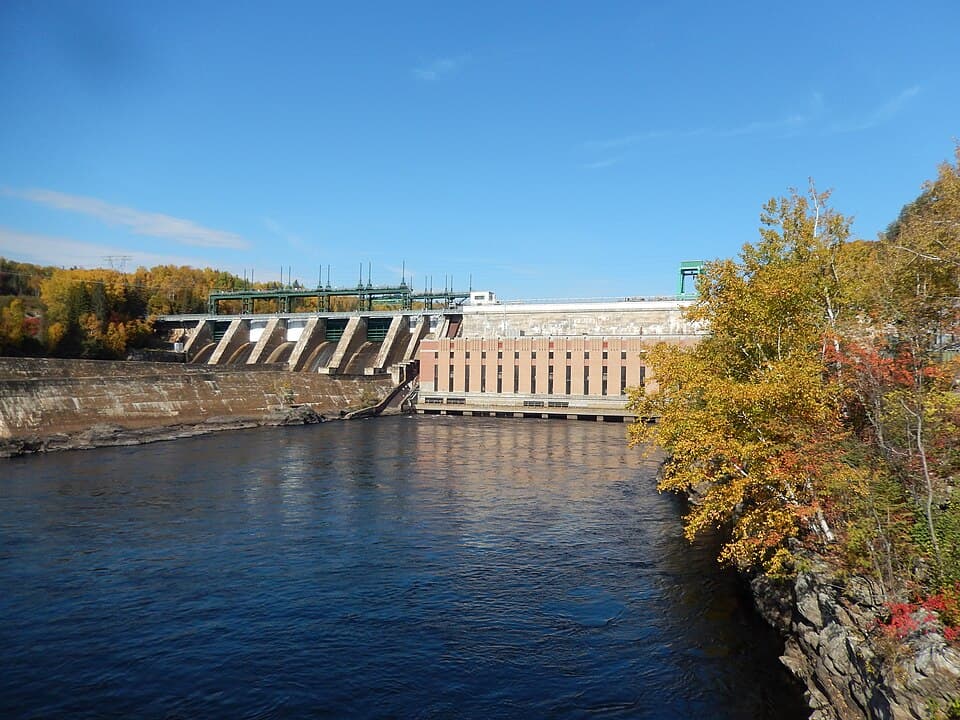
Photo: Wikimedia Commons (Fralambert)
1. La Tuque
- Median price of a single-family home (Q2 2026): $244,000
- Minimum down payment (5%): $12,200
- Region: Mauricie, La Tuque agglomeration
- Population (2021): 11,129
La Tuque is the most affordable municipality in Quebec among active markets. Its median price amounts to less than half the provincial median, a gap that comes down first to geography, since the city sits in Haute-Mauricie, about two hours north of Trois-Rivières and far from the major employment hubs.
The La Tuque agglomeration is the largest in Quebec by area, with thousands of lakes and rivers that make it a well-known destination for hunting, fishing and outdoor activities. The Saint-Maurice River runs through the birthplace of Félix Leclerc and has shaped its landscape as much as its economy, which still rests on forestry and hydroelectricity.
The market remains modest, however, with roughly 95 single-family sales per year. A buyer should expect limited choice and a certain wait before finding the right property.

Photo: Wikimedia Commons (LHOON)
2. Thetford Mines
- Median price of a single-family home (Q2 2026): $245,000
- Minimum down payment (5%): $12,250
- Region: Chaudière-Appalaches, Les Appalaches RCM
- Population (2021): 26,072
Thetford Mines built its identity around asbestos mining, an industry that shaped its territory as much as its development. Since that activity ended, the city has undertaken a transition supported by a diversified manufacturing sector and by the promotion of its mining heritage.
Set at the foot of the Appalachians, the municipality enjoys an environment marked by hills, lakes and vast forested areas. Its mining landscapes, unique in Quebec, also feed a growing form of discovery tourism.
With 235 single-family sales over twelve months, Thetford Mines has a far more active market than La Tuque for an almost identical median price. A buyer therefore has a real choice of properties, which is not the case everywhere at the bottom of the ranking.

Photo: Wikimedia Commons (abdallah)
3. Baie-Comeau
- Median price of a single-family home (Q2 2026): $265,000
- Minimum down payment (5%): $13,250
- Region: Côte-Nord, Manicouagan RCM
- Population (2021): 20,687
Baie-Comeau ranks year after year among the most affordable cities in the province. Developed in the 20th century around the pulp and paper industry and later aluminum, it retains an industrial base that still structures its economy.
The city serves as the gateway to the Manic-Outardes hydroelectric complex, whose Daniel-Johnson dam remains one of the most visited attractions on the Côte-Nord. Bordered by a river several dozen kilometres wide at this point, it also allows for marine mammal watching.
Baie-Comeau offers full services for a city of its size, including a CEGEP, a hospital and a ferry to Matane. With 173 single-family sales over twelve months, its market remains active enough to give buyers a genuine choice.
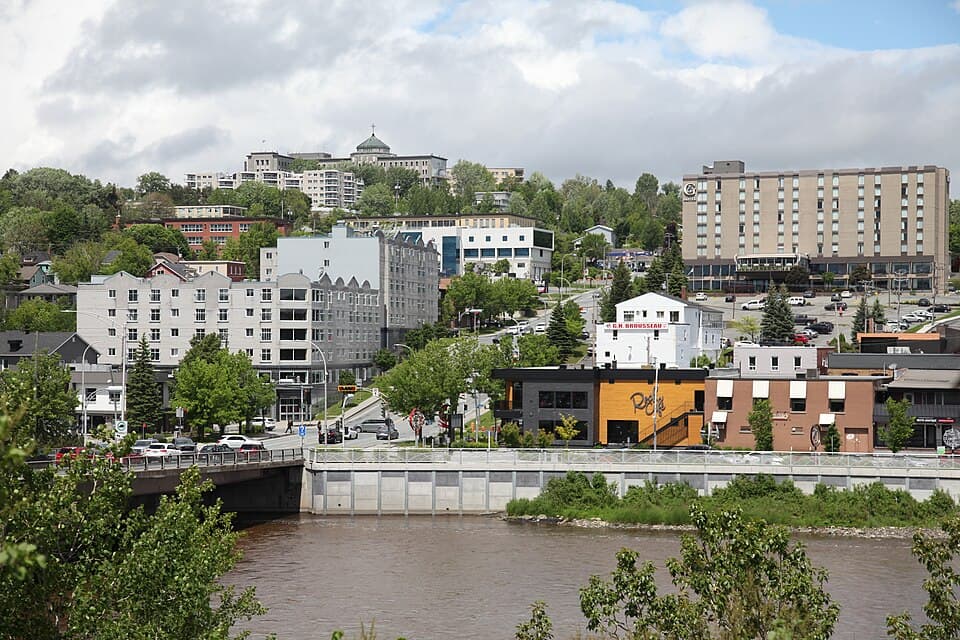
Photo: Wikimedia Commons (Marc-Lautenbacher)
4. Saint-Georges
- Median price of a single-family home (Q2 2026): $299,450
- Minimum down payment (5%): $14,973
- Region: Chaudière-Appalaches, Beauce-Sartigan RCM
- Population (2021): 32,935
Saint-Georges is the last city in the ranking to come in under the $300,000 mark, and the second most populated after Shawinigan. As the economic capital of Beauce, it developed along the Chaudière River around a dense manufacturing fabric and an entrepreneurial culture recognized across the province.
That vitality translates into a strong job market and a historically low unemployment rate, a feature that sets Saint-Georges apart from the other cities on this list. It has a lively downtown, a CEGEP and a range of services comparable to that of much larger municipalities.
With 243 single-family sales over twelve months, its real estate market is one of the most dynamic in the ranking. Being able to buy under $300,000 in a city where jobs are plentiful makes it a serious option for a first purchase.

Photo: Wikimedia Commons (Sylvain Perron)
5. Shawinigan
- Median price of a single-family home (Q2 2026): $318,000
- Minimum down payment (5%): $15,900
- Region: Mauricie
- Population (2021): 49,620
Shawinigan has the most active market in the ranking, with 446 single-family sales over twelve months. That volume, more than four times La Tuque’s, makes its median particularly reliable and reflects an abundant supply.
Born of hydroelectricity in the early 20th century, the city went through a major economic shift after several of its large plants closed. It now banks on tourism, technology and quality of life, with the Cité de l’énergie as the emblem of that transition.
The proximity of La Mauricie National Park is a major asset, with its lakes, trails and four-season activities. About an hour and a half from both Montreal and Quebec City, Shawinigan offers reasonable access to the two major centres while keeping prices markedly lower.
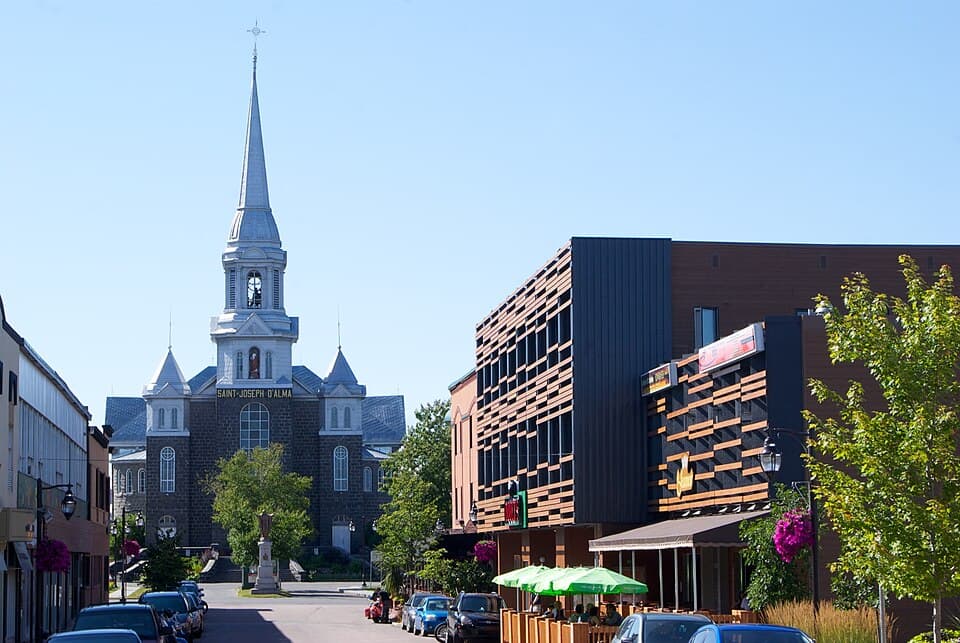
Photo: Wikimedia Commons (Johny-le-cowboy)
6. Alma
- Median price of a single-family home (Q2 2026): $318,000
- Minimum down payment (5%): $15,900
- Region: Saguenay/Lac-Saint-Jean, Lac-Saint-Jean-Est RCM
- Population (2021): 30,331
Alma posts exactly the same median price as Shawinigan in the second quarter of 2026. It ranks sixth because its twelvemonth median is higher, $313,000 against $302,187, and because its transaction volume is half as large.
Located at the outlet of Lac Saint-Jean, where the Saguenay River begins, the city occupies a remarkable geographic position and developed in part on an island. Its economy rests on aluminum, forestry and agriculture, with a smelter that remains one of the region’s main employers.
Alma also acts as a service hub for the eastern part of Lac-Saint-Jean, with a CEGEP, a hospital and an active downtown. The Véloroute des Bleuets, which circles the lake over more than 250 kilometres, runs directly through the city and is among its best-known attractions.

Photo: Wikimedia Commons (Kev22)
7. Sept-Îles
- Median price of a single-family home (Q2 2026): $320,000
- Minimum down payment (5%): $16,000
- Region: Côte-Nord, Sept-Rivières RCM
- Population (2021): 24,569
Sept-Îles is the main urban centre on the Côte-Nord and one of the largest ports in Canada by tonnage, thanks to the transshipment of iron ore from the Labrador Trough. That industrial activity supports a solid local economy, which makes its price level all the more notable.
The city takes its name from the archipelago that shelters its bay, a group of islands reachable by excursion and known for its seabird colonies. Its shoreline also offers long sandy beaches, a rarity at this latitude.
Sept-Îles is also the starting point of Route 138 toward the eastern Côte-Nord and of the train to Schefferville, a municipality that no road connects to the rest of Quebec. With 237 single-family sales over twelve months, its market remains well supplied.
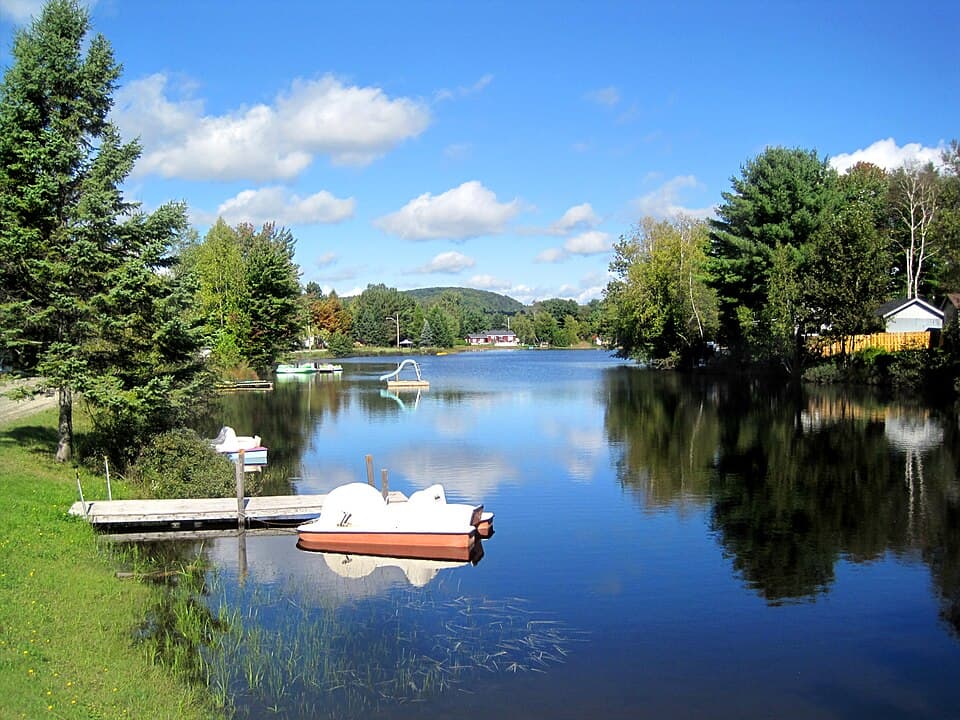
Photo: Wikimedia Commons (Picturelover)
8. Saint-Calixte
- Median price of a single-family home (Q2 2026): $332,000
- Minimum down payment (5%): $16,600
- Region: Lanaudière, Montcalm RCM
- Population (2021): 6,792
Saint-Calixte is the only municipality in this ranking located in the Greater Montreal area, and that is what makes it the most interesting one for many buyers. Less than an hour from Laval, it posts a median price nearly $192,000 below the provincial median.
The area is dotted with lakes and forests, and the municipality originally developed as a resort destination. A significant share of its housing stock comes from cottages converted into permanent residences over the decades. Buyers should therefore pay particular attention to the condition of foundations, insulation and septic systems.
Saint-Calixte’s growth is directly tied to rising prices in Montreal’s northern suburbs. Households that were targeting Blainville, Mascouche or Terrebonne are turning to more distant municipalities, where a budget still buys a house with land. With 187 single-family sales over twelve months for fewer than 7,000 residents, the market is far more active than the size of the population would suggest.
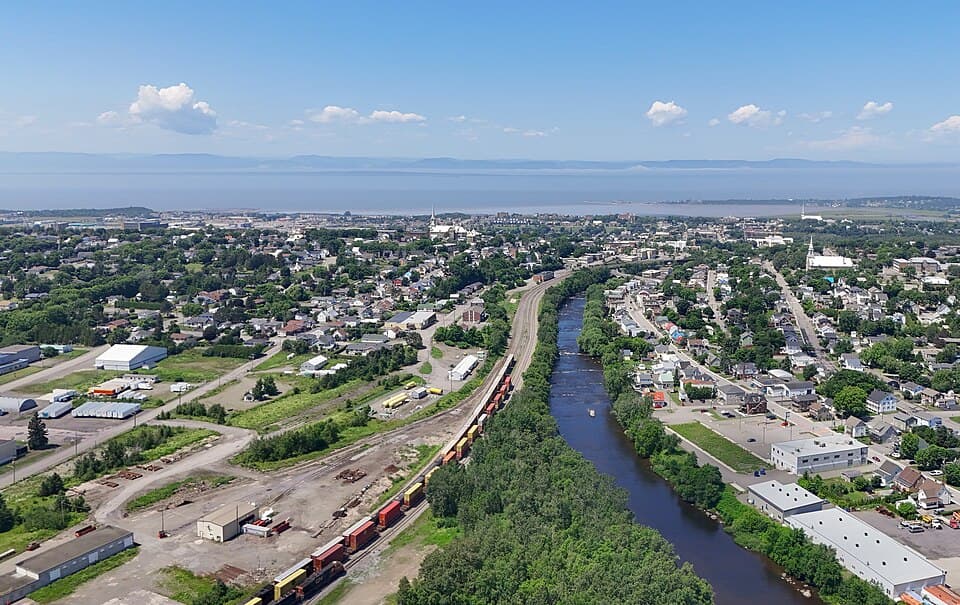
Photo: Wikimedia Commons (Quintin Soloviev)
9. Rivière-du-Loup
- Median price of a single-family home (Q2 2026): $335,000
- Minimum down payment (5%): $16,750
- Region: Bas-Saint-Laurent, Rivière-du-Loup RCM
- Population (2021): 20,118
Rivière-du-Loup holds a strategic position in eastern Quebec, at the junction of Highway 20 and Route 185 leading toward New Brunswick. The city serves as a service hub for a large part of the Bas-Saint-Laurent, with a CEGEP, a hospital and a well-developed commercial sector.
Bordered by the St. Lawrence, it is known for its sunsets and for the ferry that links it to Saint-Siméon, in Charlevoix. The falls of the Rivière du Loup, right in the heart of the urban area, are an unusual natural attraction at this scale.
The real estate market there is stable, with 140 single-family sales over twelve months. For a household looking for a mid-sized city with full services, Rivière-du-Loup offers one of the best balances between price and quality of life in the ranking.
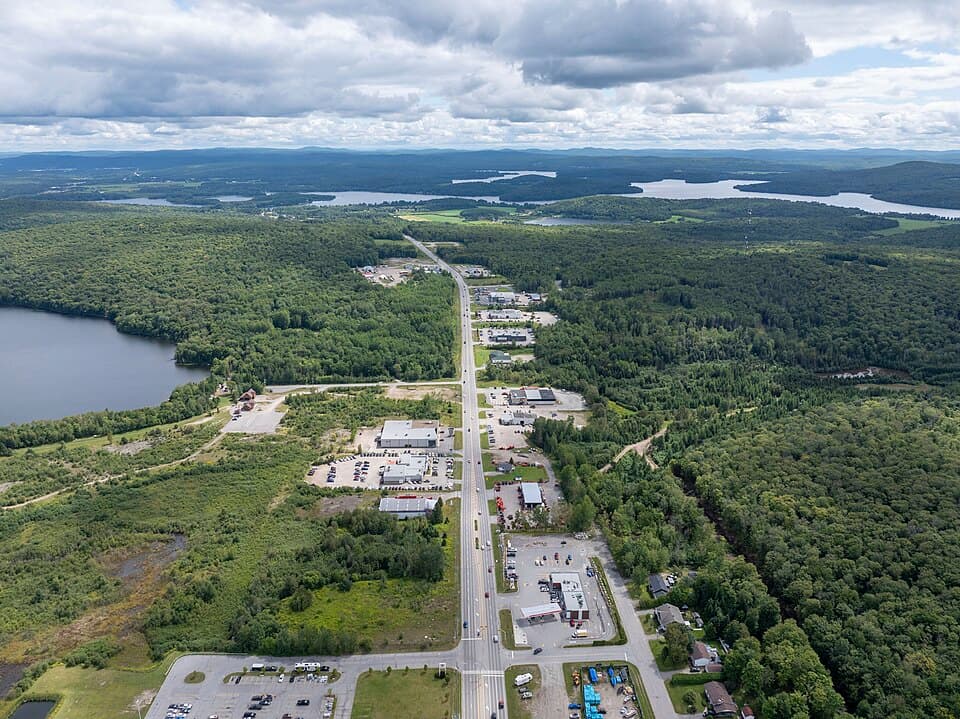
Photo: Wikimedia Commons (Hayden Soloviev)
10. Mont-Laurier
- Median price of a single-family home (Q2 2026): $345,000
- Minimum down payment (5%): $17,250
- Region: Laurentiens, Antoine-Labelle RCM
- Population (2021): 14,180
Mont-Laurier closes the ranking on a striking contrast. In the same administrative region as Rosemère, Blainville and Lorraine, where prices exceed $780,000, a house can still be bought for $345,000. Distance explains most of the gap, since the city lies about two and a half hour from Montreal.
The capital of the Hautes-Laurentides, Mont-Laurier acts as a service hub for a vast forested and agricultural territory. The Rivière du Lièvre runs through it, and the Le P’tit Train du Nord linear park, which stretches more than 200 kilometres to Saint-Jérôme, has its northern terminus there.
The region is attracting more and more remote-working households and second-home buyers, a movement that has accelerated since 2020. With 117 single-family sales over twelve months, the market remains modest, and well-located properties find takers quickly.
Why the median price rather than the average price?
The prices presented in this article are based on the median price of properties sold, not on the average price. That choice gives a more representative picture of the reality of the real estate market.
The median price is the value that splits transactions into two equal halves: half of the sales are concluded below that price, while the other half are concluded above it. The average price, by contrast, can be skewed by a few exceptionally high transactions, which tends to distort the overall perception of prices.
Looking to buy a home in one of those cities?
Habitam can help you find a real estate broker. Then you tell us about your project, we put you in touch with qualified resources for free. Simply fill out our form (it only takes a few minutes) and we will connect you with professionals.